

PLENARIES
The MedLIFE-2026 Steerings Committee has invited and also received requests from renowned distinguished scientists from over the world to offer plenaries on cross-cutting themes of life sciences. We wish to express gratitude to those who have agreed to serve as plenary speakers (click to open content):
Plenary 1: Recent developments in PFAS pollution – human blood and milk, drinking water and the European ban

Jacob de Boer
Editorial Board of the Handbook of Environmental Chemistry (Springer)
Dutch Government Health Expert (Tata Steel Operations)
Chinese Government National Expert (2013–2018)
United Nations Environment Program Advisor
Board Member of International BFR Symposia Series
Vrije University Amsterdam, The Netherlands

For almost four years the EU is working on a ban on PFAS use and production. The various intermediate versions of the ban show each time more exceptions and longer transition times. Meanwhile, in the Netherlands national reports have appeared that show that the entire population has PFAS levels in both human milk and human blood around critical values (6.9 µg/L in serum). Recent reports on drinking water quality show that PFAS levels in the west part of the country exceed advisory values for PFAS (4.4 ng/L). This is particularly true for drinking water that is obtained from surface water, mainly from the rivers Meuse and Rhine. Consumption of free-range chicken eggs is not recommended. Other reports show substantial PFAS levels in food from supermarkets, cat feed and beer.
Concentrations of trifluoroacetic acid (TFA), the smallest PFAS molecule, are especially high. On 22 July 2026, the European Food Safety Association (EFSA) has set stricter safety limits for the acceptable daily intake (ADI) of TFA. That value went down from 50 to 14 µg/kg bodyweight per day. This is still more relaxed than for other, longer chain PFAS (4.4 ng/kg bodyweight per week), but uncertainties about the immunotoxicity of TFA remain. As a precaution, EFSA included an extra safety factor of 5 in the recent TFA ADI, but it is debatable if that will be strict enough. TFA is a degradation product of fluorinated pesticides. It is also used as refrigerant, as an alternative for the chloro-fluorine carbons (CFCs) which were banned under the Montreal protocol because of their destructive effect on the ozone layer. TFA accumulates in soil and is being absorbed by various grains as well as by grapes. This results in relatively high levels in wines and beers, and in whole grain bread. It is expected that a further increase in TFA will create serious health problems in Europe, due to its presence in beer, wines, and several grain products.
Plenary 2: Recycled waste substrates as sustainable growing media for Trees on Buildings
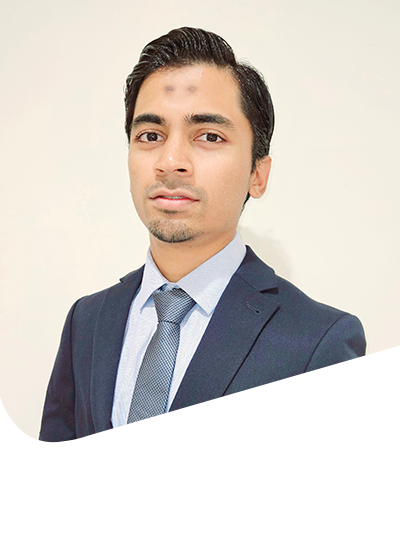
Shuraik Kader
Associate Editor – Earth Systems and Environment (Springer)
Griffith Institute for Human and Environmental Resilience (GIHER)
School of Engineering and Built Environment, Griffith University, Australia
Trees on Buildings is an excellent avenue for urban greening to enhance climate resilience in Mediterranean cities, where urban heat islands, water scarcity, and soil degradation have become persistent issues over the last three decades due to urbanisation. But their widespread adoption is limited by the distinctive requirements of the substrates (growing media). Traditional topsoils and commercial podium mixes are too heavy, overcompact, nutrient-poor, and structurally unstable for rooftop environments, making Trees on Buildings costly and technically challenging to establish. This research engineered high-performance substrates from recycled waste and industrial by-products, with systematic laboratory characterisation across multiple physicochemical and biological parameters specific to Trees on Buildings. The substrate designs were benchmarked using rooftop trials against conventional growing media from Brisbane’s landscaping supplies under real-world climatic conditions of Australian subtropical ecosystems, with comprehensive IoT-Enabled monitoring of substrate quality, leachate chemistry, and tree establishment. Recycled waste substrates (RWS) significantly outperformed conventional podium growing media, with an approximately 20% weight reduction, exceptional microbial diversity, and nutrient supply, sup-porting long-term substrate health and nutrient cycling. The leachate produced is environmentally safe, free of heavy metal contamination, and poses no risk to urban drainage streams. Trees established in RWS showed active nutrient uptake, healthy chlorophyll recovery, and successful acclimatisation to rooftop microclimates. The findings demonstrate that recycled waste substrates offer a superior, sustainable growing medium for Trees on Buildings. RWS provides a tangible, scalable solution for urban greening through Trees on Buildings, advancing the circular economy. By introducing effective substrate design through waste-to-wealth, this research contributes to SDG 6 (clean water), SDG 11 (sustainable cities), SDG 12 (responsible consumption and production), SDG 13 (climate action), and SDG 15 (life on land), offering a blueprint for transitioning to sustainable, locally-sourced substrate de-signs across Mediterranean climates for establishing Trees on Buildings for the first time.
Shuraik Kader is an Associate Lecturer in Civil and Environmental Engineering at Griffith University, Australia. His research focuses on environmental engineering, built environment, soil science, green infrastructure, natural hazards, agronomy, hydrology, and climate-resilient urban design. He received two competitive seed funds at Griffith University for green infrastructure research and collaborates with Australian industries on the design of recycled waste substrates for Trees on Buildings, focusing on the Brisbane 2032 Olympics precincts. He collaborates with researchers from Euro-Mediterranean countries to investigate the region’s needs in climate resilience, soil and water conservation, bioclimatic shifts, and sustainable infrastructure. He has published over 50 journal articles and 4 book chapters. He serves as an Associate Editor for Earth Systems and Environment, and as Editor for an upcoming Elsevier volume on sustainable soil management. He has also guest-edited one special issue on Advances in Landslide Disasters. In addition to his research, Shuraik teaches courses on hydrology, fluid mechanics, groundwater and soil contamination, research methods, and civil engineering design projects at Griffith University. Shuraik has also guest-lectured at Northumbria University (UK) and the University of Sfax (Tunisia).